Clinton was my youngest brother, from my Dad's second marriage. I first met Clint in 1980 at my Dad's home near Taft, Okla.Even as a young boy, he had the same bright smile and outgoing demeanor for which he was known as a man. His friendliness, intelligence, and energy were there from the start.He was devoted to wife Amber and their kids Brooklyn, Jackie, and Chip.
On November 11, 2025 I had a long phone call with Clint. We talked about my step‑grandfather Frank C. Regan's military service. At the close, he said: "Thanks for calling. It's great to hear your voice."My memories of Clint are gifts, for which I am grateful. It was great to hear Clint's voice.
Perhaps the greater cruelty of this loss is that, for all the praise and gratitude I direct toward my lost brother, he is not here to receive our good wishes, and I have no visible reassurance that he is cared for in his new abode. In this respect, my faith in the Universe is weak. That's not a surprise: Within six days of Clint passing, my old friend Pamela J. Fesler passed away. It feels like I have been separated from these important relationships with little explanation or ceremony.
Loss comes up in unexpected ways. Yesterday, I happened across a video of a small sailboat drifting away toward the horizon. I immediately saw that as Clint, and I felt the hurt of knowing I will not see him again.
Misfortune will happen to the wisest and best of men. Death will come, always out of season. It is the command of the Great Spirit, and all nations and people must obey. What is past and what cannot be prevented should not be grieved for... Misfortunes do not flourish particularly in our lives—they grow everywhere.”
Boyhood, family: I knew Clint for 44 years, starting when he was about 6 years old. It meant the world to me to make a new friend with such an upbeat outlook on life. It was amazing to watch him grow up. I'm reminded of the lyrics by Joni Mitchell; "You don't know what you've got til it's gone." If there is one way in which his untimely passing effects me, it will be that I'm more openly grateful for what I've got now.
Careers reduced the amount of time we visited. His career curved south through Texas, and mine went north to Kansas City for a decade. Returning to Oklahoma in 2005 was a great opportunity to renew the bond.
The Purtell family vibe: My family has three branches: Purtell (of LeFlore, Okla.), Chase (my birthmom), Regan (stepmom Marsha). One thing about the Purtells is their dominant traits. They are mellow, friendly-warm (different than friendly-polite), and sweet. The males might protest the word "sweet." Purtell get-togethers do not include drama or bitterness.
He arrived bearing gifts: Frank and Marcella Regan, my step-grandparents! At this time, only my two previous grandmothers were living: Veva Purtell and Helen Chase. After Grandmother Helen died in 1995, Frank and Marcella became the family’s elders. And there were other members of the Regans of McAlester, such as Marsha's brothers.
Clint got to know his LeFlore Purtell family from the time he was about 6 years old in 1981 until his marriage 18 years later. He fit right into the LeFlore-Purtell vibe.
I went to visit Dad and Marsha and Clint when he was a teen. He volunteered to drive me around the neighborhood. We had not visited in a while, so this was a big deal for me. Clint was observing all the rules: buckle up, signal at intersections, watch the road. It made me smile, because our Dad was conscientious in instructing his kids on driving.
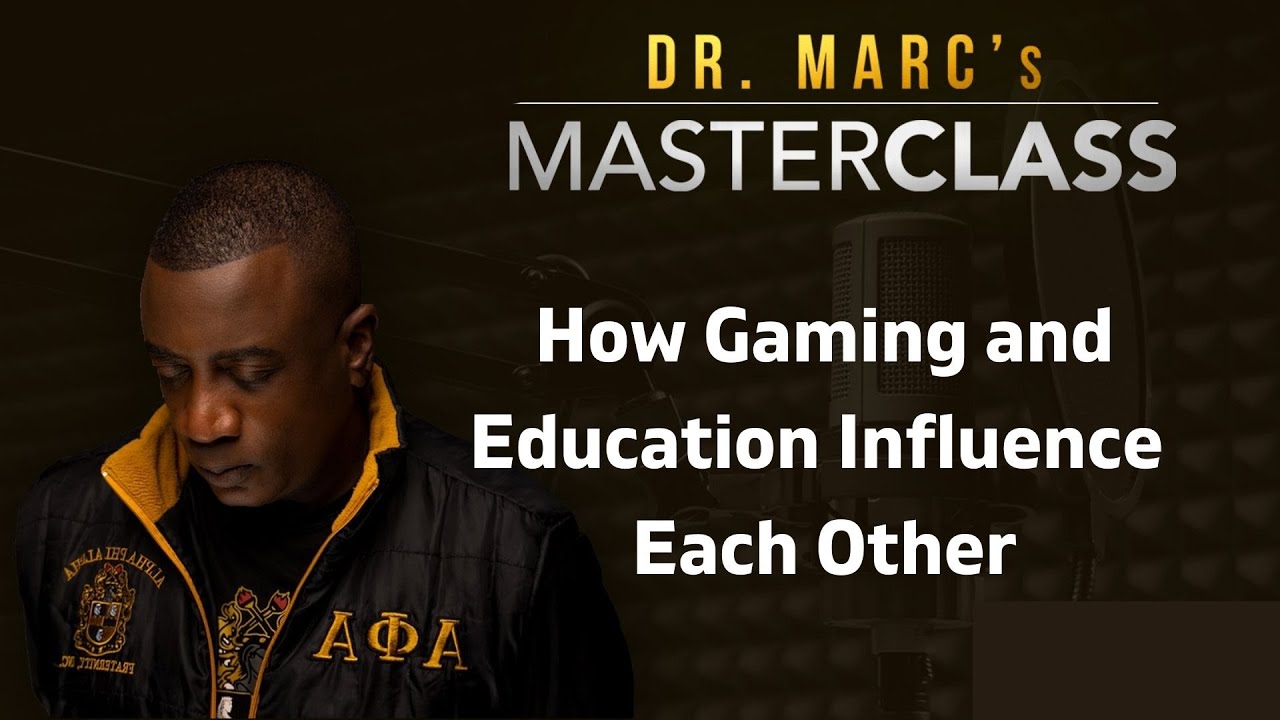
Sports, corporate life, educator: The following podcast interview had few people in the room, and Clint was friends with the interviewer, which gives this a casual air. It's also influenced by sports culture. Both Clint and Mark have participated in sports. And, Clint's wife Amber is well known for her prowess in softball (Lexington Oklahoma High School [Sooner All-Star Newcomer of the Year in 1992] and Connors State College [Athletic Hall of Fame in 2016]).
The interview feels accurate. Although, at family events, Clint would never have spoken this long. He was down to earth. The one thing slightly underrepresented is Clint's sense of humor, which he instinctively used to brighten conversations and reassure others.
YouTube transcript:
Interview with Clinton Purtell (Jan. 3, 2022)
My name is Dr. Mark Williams. I have a PhD in Education from West Virginia University. I have a Master's in Sport Management and an MBA from the University of Massachusetts. I even have an undergraduate degree in Sociology from William Paterson University.
Join me and my guests as we explore their rise to the top through adversity and challenges. It's time to help you find a hero in you. Welcome to my Master Class.
But today we have a dear friend of mine, an educator like myself, but he's not just a regular educator. He's a pretty cool educator. He's at UNT Frisco, one of the most innovative campuses in the United States, okay?
But let's let everybody know, who do I have in the studio with me today? I have a dear friend of mine,Dr. Clint Purtell. He is the Director of External Relations at UNT Frisco, which is University of North Texas in Frisco. That's another area. It's the Silicon Valley of sports, my friends. That's where it's at. And Clint's going to talk a little bit about that as well. I'll call him Clint. You gotta call him Dr. Clint, okay? If you're teaching and you're a student, you're trying to go to class, you call them Doc. All right, I'ma call him Clint 'cause that's my man, but I'm gonna also be professional and call him Dr. Clint today. How about that?
He's also Assistant Professor of Management and Entrepreneurship. He also has a career. He's not just a professor, but he's also a practitioner. He comes from corporate America. Worked for Southwest Airlines as well. He also worked for TCU in professional supply chain management. And he was educated at one of the best business schools and best schools in the country at Northwestern University and got his PhD from Oklahoma State University.
My dear friend, Doc, what's up, man?
Dr. Clint Purtell: Man, I'm glad to be here. Thanks for inviting me in, Doc. I appreciate it.
Dr. Mark Williams: You got two dogs. What's up, Doc, man? You brought your son [Dr. Purtell's son Chip ] ...
Dr. Clint Purtell: I brought my bruiser, my football bruiser. Yeah, 12 years old, 150-pound Texas-bred football player. That's right.
Dr. Mark Williams: Did you just hear that? He said that pretty quickly: Texas-bred football player. Which means you know it's a religion down here, guys. I grew up in Jersey. We're good at track and wrestling, but nothing like Texas football. And you said he's a bruiser? He's a bruiser. We're going to run for a Super Bowl right now in the Frisco football league. And this man, he's put the fear of you-know-who in a lot of young players who see him coming. He's a lead blocker and a defensive end. And yeah, he's doing it right. He's got big dreams. J.J. Watt is his man right now. He wants to be like J.J. Watt.
Dr. Mark Williams: Come over here, tell everybody. Look at that camera. What's your name?
Chip: My name's Chip.
Dr. Mark Williams: Yeah, you like to hit people [in a football game]? Do they get back up when you hit them?
Chip: Some stay down.
Dr. Mark Williams: Okay, okay. When he says that, you don't want to mess with this kid, okay? Don't want to mess with him. So what do you want to do when you graduate? When you get to college? Well, high school first. Where do you want to go to college?
Chip: Uh, I was thinking of uh Clemson, Oklahoma, or North Texas.
Dr. Mark Williams: Ah, so I can help him with that. So we're going to talk to you later about that with Clemson because I know Dabo, okay? And I know the president of Clemson. Yes, that's my man. So doctor, yeah, we got one here from Clemson. He's 12 years old, okay? So my dear friend is the president of Clemson University. Yes, we're gonna send a young man to you, okay? So he's gonna come down see Dabo in the next year or so, and we will see what happens in the next five to seven years, okay? So say hi to everybody. He's gonna play at Kyler Murray's home place, Allen High School. That's where he's headed. So we'll see. That's exciting. I'm looking forward to hearing great things about you, and I hope you enjoy the show.
Chip: Yeah.
Dr. Mark Williams: He also is a pretty good Esports player too. We're going to talk about that later as well. Like I said, I didn't know what I was going to introduce. I had no idea. I didn't even know he's a bruiser. All I know is this: that he's got his proud daddy right in front of me. Brother, tell us about your journey, man. How did you know that you were going to be in academia after coming from corporate America and graduating from one of the best schools in the nation in business? What was that transition like?
Dr. Clint Purtell: You know, man, that's a great question. I'd say it started at a very young age. I was a two-time preacher's kid. Both mom and dad [Rev. Marsha Purtell and Rev. V. Clint Purtell] were Methodist ministers, and so I grew up in the church. And, you know, raised to be a servant leader, always loved to give back and help others. But I found myself kind of being the person that people would come to to ask questions: "What should I do here? What should I do there?" I kind of thought I had a calling towards ministry for a little while, but then when I realized what my mom and dad went through, I'm like, "I don't think I want to be a preacher these days." You know, I decided to go into business. Had a great run in business. Worked for companies like Cracker Barrel, American Airlines, Dr Pepper, Cadbury Schweppes, Southwest Airlines, and had a great run.
But I love to learn. One of my greatest fears is that I'm going to wither away to nothing because I don't know anything anymore. And I read a great quote one time: the only thing that can't be taken away from you anymore is your education. So for me, it's about learning more. But when you get to a certain point in your career, as you know, it's about giving back and it's about helping others achieve that level of knowledge and inspiring them to be greater. I had a chance to do that with TCU as well as with Oklahoma State as I was going through that program.
When you see those eyes light up... You know, when I was in industry, helping people achieve their career goals, there's something rewarding in that. Even when you're a director and you help somebody else become a director and maybe they make vice president before you, seeing them achieve their goals and being a part of their journey is pretty awesome. You get to do that every day in the classroom. And at UNT, working with a lot of disadvantaged students, first-generation students, that sort of thing, it just makes you sleep well at night and you get up in the morning excited to go to work. So my calling towards academia... that's where it's at these days. I love my job.
Dr. Mark Williams: So tell us, you talked about being a preacher's kid. What was it like growing up in a household where you had expectations of living a life a certain kind of way, and then maybe your peers and the adults around you and your relatives looked at you as the standard? You have to act a certain way. Did you feel a lot of pressure growing up?
Dr. Clint Purtell: You know, there was some. I had a couple of great parents, though, that raised me with love and taught me respect. My great-grandmother, a proud Choctaw lady, was very influential in my life and taught me to respect my elders and to be humble with everything I could, but to be a leader. And if I was gonna try to do something, be the best at whatever I tried to do. So I kind of grew up with those sorts of things instilled in me.
Yeah, growing up as a preacher's kid, especially when they're both preachers, it's tough because the Methodist church, you move around a lot. A lot of preachers' kids in different religions move around a lot. For me, it was typically small-town Oklahoma when I was younger, when I was about my son's age. We would move around, and there was a lot of bullying that would go on until you get to about high school and you start to hit puberty, you start to get a little bit bigger, you start to play some football, and then all of a sudden you're the fresh meat moving into the small Oklahoma town. So things kind of turned around.
But I'll tell you what, Mark, I wore it as a badge of honor because a lot of people, when you're younger, they don't quite understand it, but you do end up becoming a role model. And I think there's a lack of those today, especially positive influence role models. It's amazing, Mark, that people come up to me now that I'm an adult, older, and they say, "You know what? I just remember back when we would invite you to those parties, and you would come, but you'd be cool. You wouldn't do the things everybody else was doing. You'd be the guy that would drive people home." And I'm not saying I didn't have my own rumble back in the day. There were times when I probably did some things I probably shouldn't have, but I always tried to be a good role model for others.
So yeah, growing up a preacher's kid, the nice part about that, Mark, is sometimes it's a get-out-of-jail-free card. There were some times that I got in a pinch, whether it was with the law doing something stupid like racing down Main Street or whatever. You do something bad, remember? Your father said he did some bad stuff too.
Dr. Mark Williams: That's right. That's right.
Dr. Clint Purtell: In small-town Oklahoma, you're getting a little fisticuffs with some of the other guys, and the cops come around. When they ask the preacher's kid, "Hey, what's going on here?" you say, "Well, Mr. Officer, I was just trying to demonstrate to these men it's time to go home. We need to go home for the evening before curfew." So usually, I had a get-out-of-jail-free card. So there were some advantages to it.
Dr. Mark Williams: That's cool, that's good stuff, man. So when you were growing up, because I think you and I are similar ages, what was it like in terms of... I know our parents made us go outside and play. And now young people, they go out and play as demonstrated by your son, but they also are playing video games a lot. Now when we were younger, when I was growing up, television was the big thing, okay? What kind of games did you play? I know we had arcades. That was a big deal back in the day. What kind of games did you play when you were growing up?
Dr. Clint Purtell: Man, you know, back in my day, we had gone out of Pong. We were in the early stage of Atari, so Atari was coming. And we got into what was the Atari 7200 or something like that, right? Yeah, yeah. Sega, Sega was big, right? The Sega Genesis, right? And then Nintendo was coming on stage. So that was kind of my day and time. I got big into computer games, actual keyboard, good old computer stuff back before it took its revolution. But that's kind of what I was about. I was big into flight simulators and that sort of thing. So I was more into the warfare combat sort of games.
Dr. Mark Williams: Did you think that you wanted to be a pilot at one point?
Dr. Clint Purtell: I did, I did. You know, I grew up in the era of Top Gun. I wanted to be a Maverick. Yeah, I wanted to fly an F-14. And that was my mission. In fact, I had an appointment nomination to the Naval Academy my senior year of high school. Last game, broke my back. And so my goal was to fly F-14s and play football at the Naval Academy. And wow, God had different plans for me.
Dr. Mark Williams: Yeah, that's what happened. You watch the movie Top Gun, you have all these amazing dreams. Very interesting movie and one of my favorite movies of all time. But yeah, so you decided to go from Oklahoma to Northwestern. How did you get out to Chicago?
Dr. Clint Purtell: Well, it was actually by way of Nashville. Straight out of school, I went to Nashville, Tennessee, worked for a publishing company there for a very short time, kind of a scholarship payback sort of deal. And then went to work immediately for Cracker Barrel and was part of a turnaround team for them while I was there. Did a master's degree at Belmont University in Nashville. My wife was going to Middle Tennessee. She played softball at Lipscomb University. And then when she finished, I started my program at Belmont, she started her master's at MTSU. It actually wasn't until we came here that I did Northwestern part-time while I was working here. And absolutely loved it, man. There's nothing like waking up on that lake, walking that track.
But that's how I ended up there. In fact, Mark, it was when I went back to Northwestern and finished that program that I decided, "You know what? It's time to break the golden handcuffs." You get those golden handcuffs in industry. You got a family of five. It's time to break the golden handcuffs, take that leap of faith. I'm being called to teach. I got to get that PhD. And it was after I got out of Northwestern, I'm like, "It's time to go get the PhD, and Oklahoma State was where it was at."
Dr. Mark Williams: We're going to stop right here for a second. Before we go on further, I'm going to stop it here for a break, but we're gonna go back. He just said he had a family of five. Okay, we're gonna stop on that to let that marinate for a second because I forgot that. But I want to remind everyone we're listening to Dr. Mark's Master Class podcast on the MAP Esports Podcast Network and powered by, of course, Innovation Media Enterprises. Aaron and Sia, thank you for holding me down, great producers, and my man Gage on the wheels of steel. You know what the wheels of steel is? Turntables. You know what turntables are? Oh my god, my man pop culture references. This cat, this young man doesn't know. We're gonna have to school him. We're gonna give him those two turntables and a microphone. That's what we need.
Dr. Clint Purtell: Yeah, yeah. Dad's about to spit some bars over here.
Dr. Mark Williams: Hey, I spit fire on the mic. I do. So listen, we don't plan this. This is how tight we are. I don't talk to Clint all the time, but when we talk, we talk. I remember about four months, three months ago, you were trying to get in touch with me, yeah, and I was trying to get in touch with you. It was crazy, and there was something wrong with our technology. And I said, "Clint does not love me anymore." And what did you say?
Dr. Clint Purtell: I said, "Mark, he's gave up on me. He will not respond to my texts, my calls. He won't take my voicemails. In fact, I think he's blocked me. He won't even go to voicemail."
Dr. Mark Williams: I thought he blocked me too. But it was like, no, I love you. What are you talking about? And we looked and said, "Oh my god." But anytime we catch up, we always have that connection. And there's some people that you meet in your life that you just talk to them and they're nice and they're cool, but there's some people that you connect with and you don't have to talk to them for weeks or a month or even a year, and you pick up where you left off. That's me and this brother right here. And you didn't even know that. See, your dad and I have got something here. We've got chemistry. Yes. But we all go back to okay, five people. Okay, tell us about this family you have, man.
Dr. Clint Purtell: It's a busy family. So I married into softball. Let's start there. I'm married to Sappa, my wife. Two-time All-American softball player. Her sister, Division One softball player. The whole lineage on that side of the family is softball. My side was gonna go the football route. So I married into softball. That was an interesting journey. But we had two girls first, right? So we had two girls first. So guess what sport they played? They started out basketball because that's what she did in high school, basketball and softball. So I've got two girls, one that's just committed to play softball at Oklahoma Baptist University. She just signed her letter of intent. A 15-year-old who wants to one-up sister and play D1. We'll see how that works out. And then I've got this young man who has visions of being a football player. So yeah, two girls and a boy, and then a beautiful wife that keeps me straight and narrow. And I guess we would say two others: we have two dogs that always keep us crazy busy.
But you know, I tell you what, my family of five with three kids that play select travel sports, it's a busy household. Every night is something.
Dr. Mark Williams: How do you manage that on a daily basis, on a weekly basis, because you have different sports, obviously different age groups? And then how do you manage it between you and your wife? Do you both go to different places? Do you go to the same places with your children?
Dr. Clint Purtell: Yeah, let me answer that first by saying you only get to be dad once, and so that's got to be a priority. When I was early in my career, I traveled a lot. I wasn't home a lot. And at a certain point in my career, as part of this calling towards academia that I had to become a professor, I realized I'm missing out on a lot. So every chance that I get now to go to one of their events, coach them, be at their games, I do it because you only get to do it once in your life. Once it's gone, it's gone. You become grandpa, hopefully. But you only get to be dad once, and I was missing out on that.
So the short answer to that question is yes, we have to split it up. Fortunately, we've got a 17-year-old now. She can drive. We're anxiously awaiting the day our 15-year-old turns 16 so she can drive. But now we're down to two, so the oldest one's been doing a lot of chauffeuring, but we still show for the two younger ones. So we go different directions a lot.
Dr. Mark Williams: And this is interesting. You talked about career paths, and you obviously did corporate America like me, and you realized, "Okay, I'm spending a lot of time away from home." How did you decide on academia as the way to balance it all for you and for you to have that opportunity to be close to your family, be able to educate, inspire, and empower folks, and also be with your wife on a more consistent basis? How did you decide on academia? How did that happen?
Dr. Clint Purtell: Yeah, that's a great question. It has a lot to do with the ups and downs of the corporate world. In my generation, and I think it still continues somewhat today, the average career tenure at any given company is about three to five years. By the time you've established that three to five-year mark, a few different things happen: we hit a recession, the company gets bought out, there's some other sort of challenge, a management team change, or whatever. So once you kind of achieve that manager level, director level, you start to see lots of ups and downs in terms of layoffs and restructuring. When you start to get a larger family, that becomes a challenge.
I started to do a lot of work with universities where we would bring them on to do research for us, that sort of stuff. But again, I love to learn. Anytime I had a chance to take an exec ed type program or some sort of class while I was working, I would jump on it. And every time I found myself in that classroom experience, whether I was going to a campus or we were bringing the school to our corporate headquarters, man, I just really enjoyed it. It was just part of that kind of tingling in the back of my mind, ringing in my ear saying, "You should really think about this." And I had my mom also saying, "You would make a great professor."
So when you've got all these things coming at you, but the thing I love about academia is, if you're good at what you do, of course in any industry you're pretty secure, but in academia, if you're a good educator, security is pretty good. And when you get to my age and you've got a family of five, security's pretty important. So that was kind of the cherry on top for me.
Dr. Mark Williams: So UNT is a very special place for a school campus, especially what you're doing. How did that come about, and what is your role there? We talked about your title, but what is your role there on a daily basis, and how did that even come about?
Dr. Clint Purtell: Yeah, so University of North Texas, of course, primarily originally located in Denton, Texas, which is north of Dallas. Frisco now is the fastest-growing city in the country. Collin County has just seen explosive growth with the relocation of the Dallas Cowboys there, Toyota North America moving there, and many, many other large firms that are going there. I think there's like 60 Fortune 1000 firms now looking at the Frisco area. But anyway, with this sort of explosive growth, the city of Frisco wanted an R1 research university, a research university partnership, because they saw that sort of opportunity for research support, tech, technology transfer, whatever, but also the need to develop talent and a talent pipeline for all these companies that are going to be moving in. Because companies look at a new area and they're like, "Hey, that looks like a great place to set up based on geography, but now tell me about the people I can hire. And when I move my family there, where are my kids going to go to school?" That sort of thing.
So UNT became kind of a target. I think there were a few other schools that were looked at, like University of Texas Dallas and SMU and others that are in the area. But UNT Frisco is a bit of a different concept. It's a kind of non-traditional university model. We don't have dormitories. A lot of us think that there are a lot of things that are broken in higher ed that could be improved. We've become very regimented in the way higher ed is run across the entire system, and we think there are some things to improve on. We're trying to work on improving those things, which we can talk about later.
In terms of me, we already lived in Frisco. I was working at Southwest Airlines. I moved there from another company here locally. So again, just kind of one of those God things for me. The opportunity opened up as I graduated. I had lots of different offers from great schools, but when UNT Frisco came calling, it was right there, local. But there was something else that was special about UNT that was different than all these other schools I looked at. First of all, UNT is majority-minority, so more than half the students are minorities. The other thing that was interesting to me about UNT was that about a third of the students are first-generation, first-generation low-income students, first-generation college.
I had taught at Oklahoma State and TCU and some other places, and I noticed in some of these other larger universities, especially the private university setting where there's a higher tuition rate, a higher cost of attendance, there are a lot of white-collar students there, students from white-collar families. And there's nothing wrong with that. There are some fantastic students at those schools. But when I had a chance to be an adjunct first at UNT Denton, I started to notice something pretty quick. It was this, Mark: when you're dealing with a student who's first-generation, who's worked their way into school, found a way out of the hood, and they were at the top of their class or at least enough to get into college, and in many cases they're working full-time and going to school full-time, maybe single parents, the grit factor of the students at UNT is exponentially more. Double, triple, four, five, ten times more than the students at these other schools.
In fact, I would say put them side by side, give them a project and tell them to complete it under pressure, the UNT student will shine every single time because they know how to win. They know how to survive. Their skills are incredible. They're sometimes a little rough around the edges. When you come out of the hood, you may not know how to go to the nice expensive dinner, those sorts of things. That's one of the things, Mark, that attracted me about UNT: we focus not only on the core education which you would expect to get out of a degree, but we also work on the soft skills and the other things necessary to be successful. When I saw all those things, man, that's what attracted me to UNT.
Dr. Mark Williams: Wow. Well, tell us about the transition in terms of taking the skill sets that you learned in corporate America, all the things that your parents taught you that you're teaching and instilling in your children. How do you bring that to academia and merge that with a group of... well, even if it's not a minority community, but how do you bring those skill sets, all those soft skills, into academia? Because unfortunately, a lot of people in academia are not thinking about soft skills. We're just thinking, "I want to get my paycheck and leave," or "I just want to PowerPoint you to death." So how did you go about bringing that in there, incorporating that, but also being at a school that kind of celebrates that? You don't see too many schools that really embrace that other than HBCUs. You see a lot of that at HBCUs, but typically at predominantly white schools, you don't see majority-minority, that's number one. But number two, how is UNT Frisco? Why did they create a model such as that?
Dr. Clint Purtell: Yeah, well, so I've been to lots of schools. I've attended lots of classes. I've had lots of different types of professors. And when I would sit through those boring lectures in the lecture hall, sometimes even the professor... it was the TA that was teaching it. It was the professor's slides, but the TA is reading the slides. And I'm like, "Just give me the slides, oh my man. I can't stand it." So I realized over time the kind of professor I didn't want to be. Does that make sense? So I didn't want to be those types of professors.
But your question is how did I bring industry into the classroom? For me, I teach business, entrepreneurship, strategy, problem-solving, those sorts of things. I want to teach students things that they can use. I want to be that professor that when they're asked when they're 40, 50, 60, "Who was the one professor that made an impact on you?" that they say Dr. Purtell. So how do I do that? I bring the world into the classroom. Whether it's bringing in CEOs or C-level folks from very large organizations. We just brought the Chief Commercial Officer from Microsoft into the classroom. We've brought some NFL players into the classroom. We've brought some folks that grew up in the hood from broken families, lived in a trailer, now multi-millionaire entrepreneurs, alumni from UNT. I like to bring positive influence into the classroom, bring the war stories into the classroom for inspiration.
But I do one thing extra. Before these speakers arrive in the classroom, whatever the topic is, whoever the speaker is, I have the students do a little research on that person, prepare two good questions in advance. And then after the person's done speaking, we'll spend 30 minutes to an hour in dialogue where they can ask any question that they want to ask. Usually, it's about getting a job: "How do I be successful? What would you do in this situation? What advice would you have?" And that's okay. But what I've found from the folks that we've talked to that I've brought into the classroom and kind of debriefed with after, they say, "Man, I didn't know what to expect. I've been a guest speaker before at a university, but man, your classroom's a little bit different. Those kids humbled me. They asked me questions I didn't expect to be asked. In some cases, they stumped me. It wasn't a hard question, I just wasn't prepared for that real of a question."
Again, I want things that they can use, that they can take out of here and do something with. As I tell them, I don't expect you to memorize the definition like the book has it, but I do expect you to get it. At the end of the day, can you talk about it? Do you get it, whatever it is that we're talking about? If they can do that, they're going to do fine in my class.
Dr. Mark Williams: So tell me about... because you and I talked about the projects that the students have and how they go about educating the students. And you have a community of young people now that are really connected to esports and video games. How do you incorporate that into the classroom, especially when you're sitting in Frisco where it's considered a Silicon Valley for esports and video games? How do you incorporate that into your classroom presently, and where do you see this going in terms of the video game industry and the academic side of it?
Dr. Clint Purtell: Yeah, I think that's a fantastic question. You know, it's interesting. I think a lot of the influencers that are out there today, the older generation, our generation, I think we've become those people that we kind of grew up with. "Man, those people that are on video games all the time, they just sit around and do nothing. They don't talk anymore. They text each other, they Snap each other, they do this and that." But they also said that about us when we got our cell phones. They said that about us when we stopped riding our bikes and all that stuff, and we turned out okay. Yeah, we turned out okay.
It's interesting to me that our military looks at gamers as possible leaders. There are different types of leadership now, different ways of socializing. Although it's a different kind of connectedness, the connectedness that we have, the access to information that we have... So what's interesting about the gaming industry for me is the gamification of everything, making things interesting through competition, through challenge.
In my class, especially with our design students that we have at UNT Frisco, we look at design philosophy, designing things for humans. How do we make it challenging? How do we make it interesting? How do we solve a problem? Right now, every semester we have a partner. This semester, our partner is Sam's Club. We're helping them with some of their innovation topics. Why does Sam's Club want to work with us? Because they want to work with this generation that's in college now. These students are not only the future customers but also the future employees, the future leaders within Sam's Club.
What are the students interested in? They're interested in looking at ways of creating user experience, user interface. But they also appreciate that it may not be so much about the game itself but more around the marketing and the commerce that's generated from that industry, and the things that can be done
Native, military, Christianity: Clint's contact with his Choctaw family connected him to two cultures: 1-The white European tradition as manifested in the United states, and 2-The much older culture of the Choctaw Nation and their unique values and sensibilities.
This interview—like the previous one—may have been career related. It is unusual in terms of time spent describing his life. The Clint I knew spent as much time listening as he did talking.
I don't remember asking him about his ancestry. But, after finding this interview in 2021, I can read Clint's words about his Native heritage and his family's military service. It feels like discovering a treasure.
The Future of Work is Diverse, Inclusive, Just and Equitable
2020 GlobalMindED
GlobalMindED: Dr. Clinton Purtell is from a heritage of Native American ancestors who have served our country, including his great, great grandfather who was one of the first federal marshals ...
... in Indian Territory and his grandfather who worked side by side with Chesty Puller (Lt. Gen, USMC). While Clinton’s football injury in high school prevented his service in the Air Force, he has led a life of service in business and academia, thanks to the PhD Project and his own hard work. Now he is dedicated to ensuring opportunity for others in his many roles at his university and in his personal life. His story below tells of the strength and fortitude of his ancestors, who influenced him. They have age-old lessons for all of today.
Dr. Clinton Purtell
Dr. Purtell, you are the first in your family to get a PhD. You are the son of two Methodist Ministers and you are Native Choctaw from Oklahoma. What is your personal story and how did your early years create your service-based, inclusive leadership that has characterized your whole life?
I was born and raised in Oklahoma. Although I was born in McAlester, OK and lived there for a few years, my father [Rev. V. Clint Purtell] entered the ministry when I was quite young. Methodist ministers tend to move often, and he was known as a “turn around” preacher. He had a knack for helping struggling churches to return to health, increase congregations and membership. However, until he entered the ministry I was raised primarily by my great grandmother, Lorena Furry Laughlin, and my grandmother, Marcella Regan. My great grandmother was a half-blood Oklahoma Choctaw, and one of the last who names were registered on the Dawes Treaty that established the Oklahoma Choctaw Nation as a Civilized Tribe (one of five tribes to earn the recognition).
We moved often. In fact, we moved every two to three years on average. When I became a teenager I went to four different high schools spanning from Oklahoma City, to Nowata, OK, and finally Lexington, OK. There were four things that I found were of significant interest to me: a calling to servant leadership, an affinity for our military, intrigue in all things business, and an appreciation of my Choctaw heritage. Watching my father’s career in the ministry, and later seeing my mother [Rev. Marsha Nan (Regan) Purtell] pursue her ordination led me to think perhaps I too had a calling towards the ministry. However, seeing the politics of churches (the good and the bad) from the minister’s family’s point of view help me conclude that there were other ways I could serve.
My family has a deep history in service to our Country. My great-great grandfather was one of the first Federal Marshalls in what was then Indian Territory (prior to Oklahoma statehood). He and his son’s, my great grandmother’s brothers, developed a reputation for busting whiskey stills during the prohibition. Years later, my grandfather joined the Marine Corps, befriended the legendary Chesty Puller (Lt Gen, USMC), and served as his Aide-de-Camp (upon request) during Korea. Many others served in the Army, Navy and Air Force. During high school I aspired to attend to the Naval Academy to play football and become a naval aviator. However, a broken back during the last football game of my high school year ended those plans..
My mother, grandmother and great grandmother instilled in me hard work, dedication, and a desire to make the world better. In fact, I began attending college as a freshman in high school as I was determined to prove that high school students could earn their way to be concurrently enrolled. My first semester was English Composition 1, and my second semester was Business Law. I graduated high school with 36 hours, and was a “guinea pig” to help establish in Oklahoma what would later become a national program referred to as “concurrent enrollment.”
I fondly remember my grandmother and great-grandmother telling me about Choctaw customers, the stories of our family history, and our family’s beginnings in “business.” My great-great grandfather was an oil man who also established a dry goods store just outside of present day McAlester, in the town of Stigler, OK. My great grandmother would tell me stories of our family’s forced relocation from the southeastern United States across the Trail of Tears; she would also tell me how our family always looked to the future and was determined to build a better world for our family legacy. In fact, my grandfather, once returned from the Marine Corps, established “The Oaks” in McAlester, an alcoholic rehabilitation center, and my grandmother served decades as a social worker in child welfare for the state of Oklahoma. Prior to becoming a minister, my mother was a teacher, then became a social worker in child welfare, and served in a number of other service organizations from Planned Parenthood to Upward Bound. It is likely these experiences that established my service based, inclusive leadership style.
Your great grandmother, Lorena Laughlin, was a half blood Choctaw and her Father was one of the first federal marshals in Indian Territory around the turn of the century. She was born in 1900 and her life spanned the horse and buggy to the space ship. What impact did she have on your life and values?
My great grandmother “Gram” had a profound impact on me. She taught me not only the values of our Choctaw people, but also the principles of business. In fact, she taught me how to count by teaching me understand the value of coins. I would count by ones, fives, tens, twenty-fives, fifties and one-hundreds (for silver dollars). As she would set the random assortment of coins out each day I saw her, I would be awarded by receiving those coins as a prize.
She was one of the first Choctaw women in Oklahoma to receive a college degree. She attended the Tuskahoma Female Academy. She and her husband went on to open a dry goods store in Stigler, invested in real estate, and oil. She would often describe her challenges as an entrepreneur and business woman. More importantly, she helped me understand how to overcome obstacles and challenges. She taught me to lead with courage, yet be compassionate and to “pay it forward.” She too was a United Methodist, and when we went to church on Sundays she would always hand me change to place into the plate
Your heritage in the Choctaw tradition includes the Code Talkers in WWI and WWII and their leadership to other cultures like the Irish in the Potato famine which came full circle recently. Tell us about that boomerang story of inspiration and inclusive leadership
Numerous Choctaw men volunteered for service during World War I. Battlefield officers overhead these men speaking in their native language. The Germans had tapped into the Allies’ communications lines. However, by training the Choctaw soldiers to use the words in their language as “code," they were strategically placed at various points across front lines and at command posts so that messages could be transmitted without being translated or understood by their enemy. It was noted that approximately nineteen Choctaws worked as code talkers during the first world war. When Choctaw soldiers were put on the phones and they talked in their Native language, the Germans couldn’t effectively intercept or spy on their transmissions. Even though Native Americans were not granted US citizenship until 1924, Choctaws remained patriotic and valiant, serving their country in the war effort. It is reported that the Code Talkers were instrumental in the Allied victory of WWI. Members of Choctaw and other Tribal Nations later served with distinction using their Native languages in World War II, Korea and Vietnam. In 2000, legislation was passed to award the Choctaws, Comanches, Navajos and other Indian soldiers who were Code Talkers Gold Medals
If you have ever traveled to Middleton, Ireland, there is an oversized, twenty foot tall steel eagle feather sculpture, with large feathers arranged in a circle, kind of like a bowl. The sculpture honors historic ties between the Choctaw Nation of Oklahoma and the Irish. More than 170 years ago, Ireland endured one of the worst famines in Western history, when the potato crops failed for many years. More than one million people died as a result
A historian, Judy Allen, summarizes what happened. After having endured forced relocation from their tribal lands in the Mississippi region, the Choctaw people heard of the famine and raised a relief fund of $170, which is the equivalent of about $5,000 today. The Choctaws lost thousands of tribal members during the harsh and torturous journey through the Trail of Tears march. Choctaws were forcibly required to leave their homes; they lost family members many of which either froze to death or starved to death. It is said that experience is what moved the tribe to act, without hesitation, to support others who had become victim to a tragedy that was not their own fault.
When I think of my Choctaw heritage, I see people of determination and strong principles. We are forward thinking, dating back to our history with the US Government through the Dawes Commission and the signing of treaties. We are a people of strategy and higher thinking, warriors when needed, yet always servant leaders to others. In times of conflict or war, we utilize our culture or communication to defeat the opposition. In an ongoing effort to maintain self-sufficiency and viability during times of reduced Federal support, our tribal community (and others) have been working to develop economic stability through a diversified strategy of small and mid-size business enterprises, including gaming and other small-business enterprises. I am proud to be an aspiring leader within my tribe and am excited to help Native American communities grow and become self-sustaining through entrepreneurship and organic growth initiatives through my research, angel and venture capital advisory, and consulting practice
Chesty Puller, who your grandfather serves with in the Marine Corps, is one of the major historical leaders in the USMC. Tell us about his path and how it has impacted your own.
My grandfather, Captain Frank Regan, joined the Marine Corps during World War I. He was a life long Marine, and served in a number of conflicts, including service as a China Marine. He served in World War II in the pacific theater, and later in Korea. He went through boot camp and was rack mates with a fellow private, Chester Puller. During his career in WWII, he served alongside Chesty Puller and the two men resumed their friendship. During WWII they served together in a number of major battles. Their friendship and camaraderie became so strong that Chesty Puller asked my grandfather to serve with him as Aide-de-Camp, which he agreed to do without hesitation. Many would ask my grandfather about the various battles and encounters he had with Chesty, how many men they had killed in battle, or even which of the battles was the one they recalled the most. My grandfather would rarely speak of details; he would only say that he saw many “Good Men” fall. It seemed it may have been my grandfather who kept a journal that captured many sayings such as “All right, they are only our left, our right, in front of us and behind us… they can’t get away this time!”, or “"There are not enough Chinamen in the world to stop a fully armed Marine regiment from going where ever they want to go," and “"Hit hard, hit fast, hit often."
My grandfather instilled in me a number of the values of the Marine Corps. For example, I can still remember him talking about honor, courage, commitment, and service to God and country as he would take me to get a hair cut at the local barber or when he would load me into his old truck and we would drive to get our favorite A&W Root Beer. As mentioned earlier, I too wanted to serve, but a football injury in high school prevented my continuation. However, I wanted to find a way to still serve.
As I entered the business world, I had an opportunity to serve in a different way. Even though I did not get the opportunity to serve my country though military service, I found ways to “Serve those who served me.” I was asked by a number of entrepreneurial incubators, most of which were specifically supportive of transitioning military professionals (or veterans). I held dozens of veteran’s successful launch new businesses or enter into franchise ownership by coaching them and helping them navigate the waters of business start-up. I also volunteered for a number of programs, such as the Dallas ramp-build project, which built home-entry ramps for disabled individuals, including disabled veterans.
How did the PhD Project help you to go from leadership in business to leading students to their highest purpose?
The PhD Project helped me to 1) understand the process of what it takes to obtain a PhD, 2) the challenges of transitioning from a traditional career in industry to academia, and 3) the importance of minorities (and the lack thereof) in higher education.
A significant challenge facing the education system of the United States is a shortage of PhD’s. This is particularly true of Native American’s who hold PhD’s. Estimates of the participation of historically under-represented minorities (African-Americans, Hispanic Americans, and Native Americans) as faculty members in US business schools are less than 10%. However, these same under-represented minority groups comprise more than a third of the nation’s total population, with increasing projections for future decades.
The PhD Project helped me to realize it is incumbent upon us as Native Americans to answer the call to promote and support formal education. I was honored to participate in the PhD Project (www.phdproject.org), a special interest group attempting to address the shortage of Native American (as well as other minorities) and doctoral students and faculty by increasing the numbers business school professors through information, support, and preparation. Since the establishment of the PhD Project in 1994, the ranks of African-American, Native American, and Hispanic-American business professors has tripled—from 294 to more than 1,000. I knew the only way I could truly make a difference to improve this situation was to lead by example and successfully navigate the PhD journey myself.
The PhD Project helped me not only evaluate which business school was right for me, but also the importance of research. The PhD Project introduced me to Oklahoma State University’s program, where I learned of their strength in entrepreneurship and business. The culture of Oklahoma State University was a perfect fit, and the faculty were humble yet amazing scholars. Their pragmatic approach and focus on research that is practical and useful for solving problems in industry resonated with me perfectly. A number of times throughout my career I engaged with Universities in sponsored research initiatives, or consulted with scholars about research they recently published. More times than not, the research findings were Greek to me. We simply did not speak the same language. However, through the inspiration I received from The PhD Project and the training I received from Oklahoma State, I gained the skills to be able to not only conduct and understand academic research, but also translate it to industry in layman’s terms
Finally, the PhD Project helped me understand the various organizations that support and promote Native American scholars. During my time at OSU, I was recognized as an American Indian Graduate Center Fellow and Scholar, as well as a Scholar of the Native American Institute of Economic Development. The PhD Project, as well as support of my mother, Rev Marsha Purtell, also inspired me to complete the Executive Scholar program at Northwestern University’s Kellogg School of Business where I specialized in mergers and acquisitions, strategic alliances, strategic management and entrepreneurship.
What else do you want to tell inclusive leaders at this historic moment in time- Native leaders, veterans, entrepreneurs, emerging leaders and wisdom keepers?
Inclusive leaders need to start by listening, understanding and empathizing. Our country is undergoing unprecedented changes and challenges. Many look for leaders to “lean in” and take charge. However, before we can lead, we need to listen to the concerns of others. We need to not only hear what is said, but reflectively listen to ensure we are interpreting what others are trying to convey. We need to empathize with those around us. We can lead and create change that is good, but if we don’t understand what those around us need, who is to say the change is actually “good”?
We must also embrace diversity and approach challenge with courage. I would submit that Native Americans have experienced racism, sheer terror, and exclusion. I hear some references to indigenous people being the “forgotten minority.” However, we found ways to overcome through peace and re-establish positions of leadership. We strive to lead by example and continuously be of service to our Country. We are proud of our heritage, and seek to preserve all history.
Finally, we must remember that we all have a role to play in society. Each of us have strengths and weaknesses. However, we all have a purpose and need to take an active part in making the world a better place. We need to be proud, yet humble; none of us is necessarily better than anyone else. While some of us may be Blessed in certain ways, we all can experience the Grace of God and should seek to serve others.
Purtell family reunion ~1981 at Robbers Cave State Park, Oklahoma. L-R: V. Clinton Purtell, Marsha Nan Regan Purtell, Jeff Purtell, Claire Purtell, Clinton Purtell, Keith Purtell
Even as the family grieved the 2020 deaths of Dad and Marsha from COVID (two weeks apart), Clint took time out to log into his mom's Facebook and thank his inner circle...
Letter from a boy
age 8 (1984)
Then shall you gather the little boys and girls at the house of mourning, and at the funeral feast a speaker shall address the children and bid them be happy once more, even though by a death, gloom has been cast over them. Then shall the black clouds roll away and the sky shall show blue once more. Then shall the children be again in sunshine.”
Grief and 'Anattā'
About 2,000 years ago, Buddhists in northeast India wanted to help people cope with suffering. They put forward a practical therapeutic tool that proposes that there is no fixed, permanent "I" or "mine." They named it Anattā.
Think of Anattā as a mental exercise or habit to help individuals let go of the ego, attachment, and the clinging that leads to suffering.
aggregated via Google:
A compassionate reading of Anattā usually shifts the emphasis toward “you do not have to carry experience as a fixed, isolated self.”
A lot of academic writing treats Anattā as a metaphysical claim to analyze. But in lived practice, it is often approached as relief.
One compassionate interpretation goes something like this:
Grief hurts partly because the mind tries to hold reality still.
We instinctively say:
“This person was mine.”
“My life was supposed to continue this way.”
“I cannot survive this change.”
Anattā loosens the rigid structure around those thoughts.
Not by denying love or attachment, but by softening the idea that there is a permanent “owner” standing outside the flow of life.
In this view, sorrow is not a failure. It is what happens when a living nervous system experiences change, separation, memory, longing, and love. Buddhism traditionally does not ask a grieving person to become emotionally numb. It asks whether suffering becomes heavier when the mind builds a solid identity around the pain:
“I am broken.”
“My life is over.”
“This wound defines me forever.”
The compassionate side of Anattā is that these identities are not fixed truths. They are passing formations.
Many modern teachers describe this gently:
Thoughts arise
Emotions arise
Roles arise
Even the sense of “me” arises moment by moment
That can create space around grief without invalidating it.
There is also a relational dimension that sometimes gets missed in academic discussions. If there is no isolated, sealed-off self, then we are deeply interwoven with others. Loss hurts precisely because connection was real. Compassion naturally follows from that understanding.
Thích Nhất Hạnh (TIK NAHT HAHN) often expressed Anattā in especially humane language. Rather than emphasizing “nonexistence,” he emphasized “interbeing” — the idea that nothing exists independently. A cloud becomes rain, tea, food, memory, and eventually part of another person. In grief, he sometimes encouraged people to look for how the loved one continues within them through speech, gestures, values, habits, perception, and relationship.
That is very different emotionally from a cold philosophical statement like “the self is an illusion.”
Likewise, Pema Chödrön often frames these teachings as training in tenderness toward uncertainty rather than detachment from humanity.
A compassionate approach to Anattā usually includes several recognitions:
You are allowed to grieve.
Clinging intensifies suffering, but love itself is not the problem.
Identity is more fluid than the mind assumes.
Pain changes over time because everything changes over time.
No emotional state is permanent.
You do not have to solve grief intellectually to live through it.
In practice, this can become less about philosophy and more about very small moments:
Noticing a feeling without calling it “who I am,”
Allowing sorrow to move,
Sensing connection instead of isolation,
Recognizing that even brokenness is not fixed or final.
That tends to be where the warmer, more compassionate interpretations of Anattā are found—more in direct human experience.
Comments?
Please use the button below to comment on this article...
Shortly before his funeral, I posted a tribute to my youngest brother Clint on the Wilson-Little Funeral Home (Purcell, Okla.) website and confirmed it was published. Several hours later, I went back to see what other people had written. A number of folks had made heartfelt statements. My tribute was gone. I contacted the funeral home to ask if there was a technical glitch. They ignored me. So, here it is.
Report problems
Contacting me is a much more efficient and honest way of addressing issues than bringing a lawsuit against the author(s). Bringing a lawsuit instead of asking for a revision reveals the motives of those who abuse the legal system to intimidate citizen journalists while seeking to retain their employees’ stolen wages.